


DEFEND MINDORO!
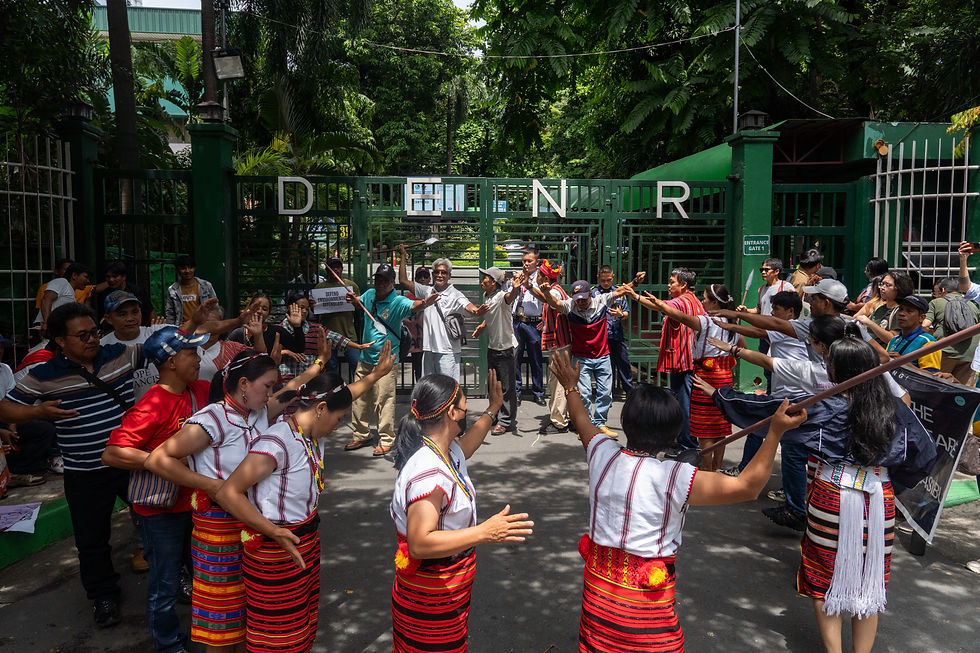
A mass indignation protest was held this morning by progressive groups in front of Camp Aguinaldo Gate 2 in condemnation of the several instances of aerial strafings and bombings carried out by the Armed Forces of the Philippines (AFP) in Barangay Cabacao, Abra de Ilog, Occidental Mindoro on January 1, 2026.
Reports consolidated by Karaptan Southern Tagalog confirmed the deaths of three Mangyan-Iraya Children, youth researcher and student Jerlyn Rose Doydora who succumbed from an illness during the bombings, and the disappearance of Chantal Anicoche.
Further reports suggested over four battalions, with each carrying over 500 soldiers, were deployed by the AFP. Four helicopters were reported to have dropped at least 12 bombs and conducted indiscriminate and continuous strafing on New Year's Day.
In a statement released by the AFP, the operations were composed of elements from the 76th Infantry Battalion, 1st Infantry Battalion, 59th Infantry Battalion, and the 5th Scout Ranger Battalion under the control of the 203rd Infantry Brigade.
Data from KARAPATAN Southern Tagalog documents over 16,733 victims of human rights violations in Mindoro for the entirety of 2025. Further data from the Provincial Social Welfare Office reports that the continued military operations resulted in the displacement of over 188 Mangyan-Iraya Families, over 769 individuals.
The Climate Change Network for Community Based Initiatives (CCNCI) urges the government to immediately investigate the AFPs blatant violation of International Humanitarian Law against our nation’s most vulnerable sectors. Our armed authorities must recognize the rights of civilians, especially the indigenous people, when engaging in military operations.
Furthermore, it urges the National Commission on Indigenous People (NCIP) to end its historical institutional neglect of the welfare of rural indigenous people and condemn the AFP for perpetrating a continued cycle of violence against the indigenous people of Mindoro.
As members of the indigenous community, they remain at the forefront in the achievement of climate resiliency as their life is rooted upon the land that they cultivate. In truth, they are the most vulnerable sector amidst a worsening climate crisis, made only worse by the perpetual undertaking of the AFPs military operations.
The continued militarization of our rural regions has been one of the major causes of the deterioration in our environmental landscape in the Philippines. From the destruction of our topography caused by military operations to the pollution of the expanding US-military complex in the Philippines, our environment remains battered by military institutions.
We seek justice for the victims and to hold to account those who are responsible for the senseless deaths in these altercations. Further safeguards must be established to ensure the welfare of our indigenous communities. Our armed authorities must faithfully live by the mantra it espouses as they remain to be a threat to the welfare of the community and the environment.


Comments