


7 YEARS OF RICE LIBERALIZATION LAW
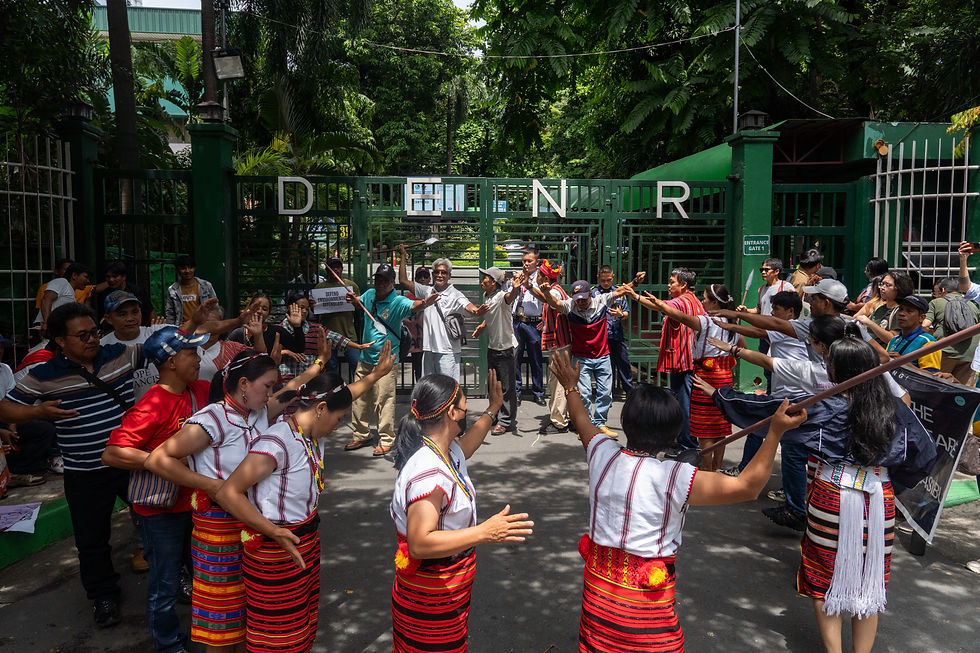
The Amihan National Federation for Peasant Women & Bantay Bigas, along with rice farmers from Bulacan and Laguna, led a Black Friday Protest in front of the Department of Agriculture in order to call for the immediate abolition of RA 11203, or the Rice Liberalization Law, in its 7th year since it was implemented.
Amihan stressed that the aforementioned law, along with a wide range of neoliberal policies from the time of the Duterte Administration until the Marcos Jr. administration, is the root cause of the current crisis in our agricultural sector. They continued that the country has accrued a historic number of rice imports and has become a top rice importer despite being an agricultural country.
Rice farmers fell to bankruptcy because of the sharp drop of rice paddy farmgate prices, while consumers suffered high prices due to the import-oriented economonic policies of the Marcos Jr. Administration with only the big traders-importers benefitting from the current structure of our agricultural economy.
Amihan Secretary General Cathy Estavillo states that the current trajectory of neoliberal policies has hindered the development of local production while the government, along with its respective agencies, have failed to support rice farmers as the country continues to rely heavily on imports.
She argued that the presidency of Marcos Jr. was more preoccupied with gimmicks and propaganda that portrayed cheaper with his Php 20 rice but continued to burden local rice farmers by reducing tariffs on imported rice, neglecting rice lands across the country, and low irrigation development.
“It is clear that the government is haggling the prices of rice paddies as the price of rice remains unaffordable under the Rice Liberalization Law. This January, the price of rice rose by P5 - P10 per kilo with the cheapest falling around P48 - 50 per kilo. Government policies remain bankrupt because it favors large-scale traders, importers, and smugglers, with the Marcos-Araneta family profiting from this structure as well. They, themselves, are the syndicates of rice,” exclaimed Estavillo
.
The Climate Change Network for Community Based Initiatives (CCNCI) stands in solidarity with our farmers from Bulacan and Laguna. Public clamor from farmers has been swift and sustained for the past 7 years but has fallen on deaf ears. The current liberalized state of our rice economy traces its roots back to his fathers dictatorship which pushed forth a series of foreign policies under the former Ministry of Agriculture's Balanced Agro-Industrial Development Strategy (BAIDS).
The World Bank, with their $150 million loan, invigorated the importation of agricultural products and shifted the conversation of agricultural policy away from local industrialization to mass-importation of agricultural products that we have the capacity to create in our own soil. Furthermore, the private sector monopolized the agricultural sector and with a capitalist framework came a number of chemicals that have become ingrained in the production of rice.
These are hazardous chemicals that have proven to lead to soil degradation, the pollution of our water reserves, and the rise in acidity which leads to infertile land. As an institution that advocates for agroecology, we stand in solidarity with our farmers and condemn the evident neglect of the Department of Agriculture in the current state of our agricultural sector.
While they boast their P20 peso rice which remains inaccessible to a great majority of Filipinos, our farmers are drowning in debt due to the historical decline of our agricultural sector caused by these policies. In legislating meaningful change, private interests must be taken out of consideration and the genuine grievances of our farmers must be heard.


Comments